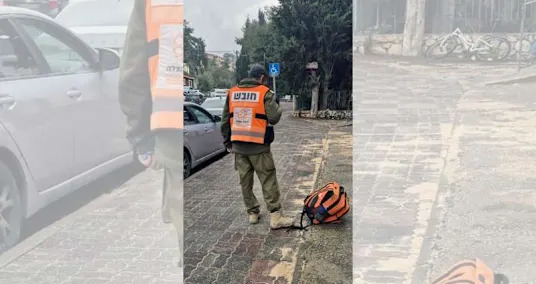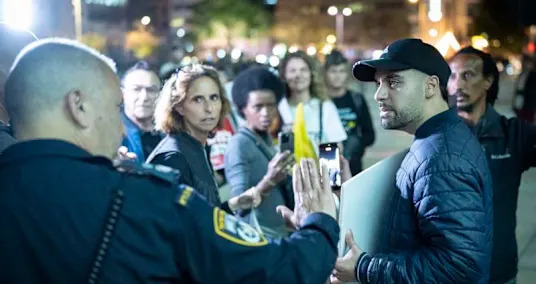
Protests took place in Tel Aviv, Jerusalem, Haifa, and Beersheba, as a survey found broad but uneven support among Jewish Israelis for Operation Roaring Lion.
Israel Police arrested 21 anti-war protesters Saturday night as demonstrations against the conflict with Iran expanded in multiple cities despite restrictions on public gatherings.
Protests took place in Tel Aviv, Jerusalem, Haifa, and Beersheba, with hundreds of participants reported in Tel Aviv and Jerusalem and about 100 in Haifa, marking the largest turnout since weekly demonstrations began. Authorities said 13 people were arrested in Tel Aviv and eight in Haifa.
Police said the gatherings were not approved under Home Front Command regulations that ban events with more than 50 people. Officials said the increase in turnout followed calls by groups opposing the government to protest despite the restrictions.
“During a situation assessment that took place at the scene with a Home Front Command representative… it was clarified that there was a real risk to human life and accordingly, Yarkon [precinct] police commander Tzachi Sharabi ordered the gathering to be dispersed,” police said.
Hadash-Ta’al chairman Ayman Odeh, an Arab lawmaker involved in the protests, criticized the police response, calling officers fascists “in the service of the government” and saying they were afraid of “the heroic citizens who went out, despite everything, to make their voice heard.”

Survey shows broad, uneven support for war
The demonstrations come as a March 2026 survey by the Israel Democracy Institute found broad but uneven support among Jewish Israelis for Operation Roaring Lion. Support was strongest on the Right at 87% and about half on the Left.
The survey also found that Jewish and Arab respondents largely agreed that Iran’s resilience has been stronger than expected. Most Jewish respondents said Israeli society could sustain the campaign for up to one month, while 28% said as long as needed. Arab respondents were less optimistic about how long the public could endure the conflict.
A majority of Jewish respondents said Prime Minister Benjamin Netanyahu’s decision was driven by security considerations, while most Arab respondents viewed it as political.
LATEST POSTS
- 1
 Vote In favor of Feasible Way You Prescribe to Shop for Garments
 - 2Aspect Biosystems receives funding for cellular medicine project
- 3Make your choice for the PS5 game that you love playing with companions!
- 4Boats escort freed whale away from shallow waters off German coast
- 5Plane Passenger Allegedly Includes ‘Bomb Threat’ in Hotspot Network Name, Forces Flight to Make Emergency Landing





- At least 30 killed in attack on Nigeria village
- Desired Travel Objections Worldwide: Where to Go Straightaway
- Hunger and makeshift shelters persist in north Caribbean nearly 2 months after Hurricane Melissa
- Purdue Pharma's deal means money for some victims, end of Purdue company name. Here's what to know
- Israeli girl suffers cardiac arrest during sirens in Safed, hospitalized in serious condition
- Nurturing Hacks: Astuteness from Experienced Mothers and Fathers
- IDF bans Android phones for senior officers, iPhones now mandatory, Army Radio reports
- Cruising Solo All over the Planet: An Excursion of Self-Disclosure
- Changing Negative Cash Mentalities: Enabling Your Monetary Excursion