DAKAR, Senegal (AP) — Government forces in Burkina Faso killed over twice as many civilians as militant jihadist groups over a two-year period, according to a study by Human Rights Watch, which accused both sides of war crimes and crimes against humanity.
According to the report, of the 1,837 civilians killed in the country between January 2023 and August 2025, more than 1,200 were the result of government forces. Over 2 million people are estimated to have been displaced since the conflict began, according to the United Nations.
Ilaria Allegrozzi, the senior Sahel researcher at Human Rights Watch, told The Associated Press that the reported death toll was “most likely a gross undercount because most instances go unreported.”
The Burkina Faso authorities did not respond to requests for comment.
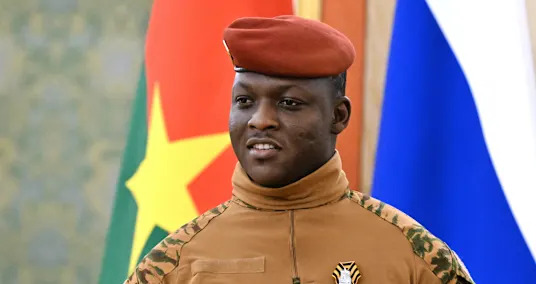
Human Rights Watch says that under President Ibrahim Traoré, the Burkina Faso junta has carried out “a broad crackdown” on political opposition, peaceful dissent and independent media, “fostering an atmosphere of terror and severely restricting the flow of information about the conflict and its toll.”
The landlocked nation of 23 million people has symbolized the security crisis in the Sahel region south of the Sahara Desert in recent years. It has been shaken by violence from extremist groups linked to Al-Qaeda and the Islamic State group, and the governments fighting them. The Sahel is the world's deadliest region for extremism, according to the Global Terrorism Index.
Abuses by government forces in Burkina Faso as well as militants from Jama’at Nusrat al-Islam wal-Muslimin (JNIM) — an Al-Qaeda aligned militant group operating in the region — amount to war crimes and crimes against humanity, Human Rights Watch said.
“These atrocities, including the government’s ethnic cleansing of Fulani civilians, amount to war crimes and crimes against humanity for which senior leaders on all sides may be liable,” the 316-page report said.
In one attack detailed in the report, government forces are alleged to have executed 223 civilians, including at least 56 children, accusing them of collaborating with JNIM in the northern Yatenga province in early 2024. In a separate attack the same year, JNIM are said to have killed at least 133 civilians, including dozens of children, in the center of the county.
The targeting of civilians, particularly those of the Fulani ethnic group, appears to be the de facto policy of the Burkina Faso government, according to the rights group, with reprisal attacks against villages accused of collaborating with JNIM being common due to the group's perceived loyalty to militant groups.
“The highest levels of government appear supportive of military action against Fulani people based on these attitudes,” said the report, adding that it is not possible to get an accurate picture of the situation in the country since the military leadership has installed a system of de facto censorship. Those who do speak out risk being abducted, imprisoned or drafted into the army.
The military junta, which took power in 2022, has failed to provide the stability it promised. According to conservative estimates, more than 60% of the country is now outside of government control, more than 2.1 million people have lost their homes and almost 6.5 million need humanitarian aid to survive.
Conflict monitoring group Armed Conflict Location & Event Data estimates that least 10,600 civilians have been killed since 2016.
LATEST POSTS
- 1
 NASA astronauts to return from space early due to an 'unexpected medical issue.' What happened — and when are they coming home?
 - 2Everyone knows F1 is for the girls. I wandered into the Las Vegas desert to find out why.
- 3Senegal limits foreign trips for officials as the fallout from Iran war deepens
- 4When will the Epstein files be released — and will they reveal anything new?
- 525 of the world’s best sandwiches


- World’s tallest bridge and biggest museum named ‘greatest places of 2026’
- Bullets in Luigi Mangione’s bag convinced police that he was UnitedHealthcare CEO killing suspect
- Revealing the Specialty of Food Matching: Improving Culinary Encounters
- 7 Espresso Machines for Home Baristas
- The most effective method to Decisively Use Open Record Rewards
- Step by step instructions to Recognize the Distinction Between Lab Jewels and Precious stone Simulants
- The Best Games Crossroads in History
- Netanyahu expects Iran's leadership to fall
- How Skoda Lost Its Biggest Market In Just Seven Years