When you buy through links on our articles, Future and its syndication partners may earn a commission.

From galaxy rotation curves that defy Newton's laws to gravitational lensing that bends light in eerie ways, scientists have been piecing together clues about dark matter like interstellar sleuths.
Particle physicists, astronomers, and cosmologists have built massive underground detectors, launched satellites, and even proposed entire new particles — all in pursuit of this elusive substance.
This quiz will test your knowledge of the strange, shadowy realm of dark matter. We'll explore the history of its discovery, the theories that try to explain it, and the cutting-edge experiments designed to catch it in the act.
Whether you're a seasoned space nerd or just curious about the universe's biggest mystery, you're in for a brain-bending ride.
Try it out below and see how well you score!
LATEST POSTS
- 1
 Woman gives birth on roadside after hospital allegedly sent her home: Family
- 2The most effective method to Pick the Ideal Lab Precious stone Wedding band
- 3The Way to Monetary Health: Individual budget Change
- 4Virtual Domains d: A Survey of \Inundation and Ongoing interaction Mechanics\ Computer game
- 5Taylor Swift changes 2 song lyrics on 'Reputation' on the night of her Eras tour documentary premiere




- Brazil's agricultural research agency gets cannabis research greenlight
- New 'People We Meet on Vacation' trailer teases Poppy and Alex romance: Everything we know about the new Netflix movie
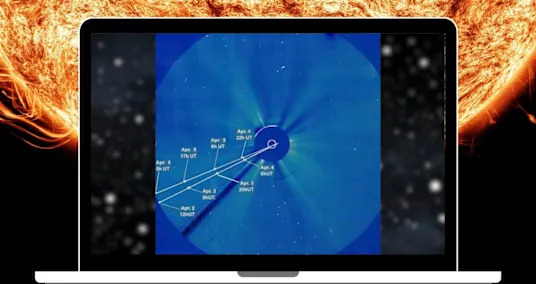
- Watch comet C/2026 A1 plunge toward the sun online this week
- Figure out how to Put resources into Lab Precious stones: A Novice's Aide
- BioMarin to acquire Amicus Therapeutics for $4.8 billion in rare disease bet
- 5 Destinations Where Airfare Is Dropping The Most For Spring 2026, Per Dollar Flight Club Analysis
- Fuel Price Spike Drives Surge in Used EV Sales in Europe
- At 72, Kathie Lee Gifford says aging isn’t what she expected. 'The golden years? It’s a lie.’
- 75% of US adults may meet criteria for obesity under new definition, study finds