When you buy through links on our articles, Future and its syndication partners may earn a commission.

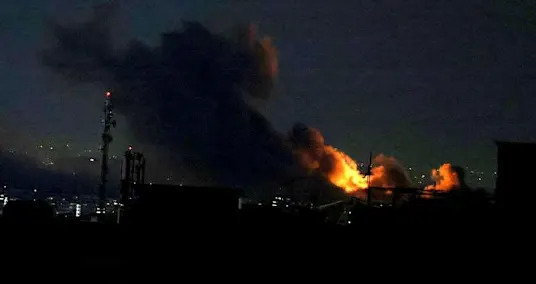
The first test flight of Landspace's Zhuque-3 rocket ended in a fiery explosion after successfully reaching orbit.
Chinese company Landspace launched its 216-foot (66-meter) stainless steel Zhuque-3 rocket from the Jiuquan Satellite Launch Center in the Gobi Desert in northern China on Tuesday (Dec. 2). The reusable, methane-liquid-oxygen-powered rocket successfully placed its expendable second stage in orbit, according to a statement from Landspace.
But after making a successful reentry, the rocket's first stage booster appeared to lose an engine during its landing burn and catch fire before crashing into the ground in a spectacular explosion. "An anomaly occurred as the first stage approached the designated recovery zone. No personnel safety issues occurred," Landspace wrote on social media. The company is now investigating the anomaly to discover its root cause.
Despite the landing failure, Landspace is hailing the test flight as a success, adding in its social media post that "China's first rocket recovery attempt achieved its expected technical objectives." These include verifying Zhuque-3's recovery system, engine throttling, and attitude control. Stills from videos of the crash landing show that the first stage landed within just meters of its target landing zone.
Zhuque-3 resembles SpaceX's dependable Falcon 9 rocket; both rockets feature a reusable first stage and an expendable upper stage and are powered by nine engines.
Zhuque-3's Tianque-12A engines are powered by a mixture of liquid methane and liquid oxygen (methalox), however, while the Falcon 9's Merlin engines burn liquid oxygen and rocket-grade kerosene.
Zhuque-3's payload capacity is similar to Falcon 9's as well, able to loft 40,350 pounds (18,300 kilograms) to low Earth orbit (LEO). Falcon 9, meanwhile, can send 50,265 pounds (22,800 kg) to LEO.
A Landspace previous rocket, Zhuque-2, became the world's first methane-powered rocket to reach orbit in July 2023. SpaceX's Raptor engine, which powers its Super Heavy booster and its Starship second stage vehicle, also burns liquid methane and liquid oxygen.
The Zhuque rockets are named for the vermillion bird from Chinese mythology that represents the fire element in Taoist five-element cosmological system.
LATEST POSTS
- 1
 23 Most Amusing Messages At any point Sent Among Youngsters and Their Folks
 - 2Trump says Cuba is 'ready to fall' after capture of Venezuela's Maduro
- 35 Critical Rules For Business Regulation Chiefs
- 4A Past filled with Old Civilizations: The World's Most established Societies
- 5Instructions to Choose the Best Web based Advertising Degree Program for Your Objectives


- IDF drops over 80 explosives on Tehran weapon production sites in latest strike
- Bayer reports positive results for blood thinner after 2023 setback
- Family Matters: Tips and Guidance for Effective Nurturing and Everyday Life
- Remain Fit: Powerful Wellness and Work-out Schedules for a Better You
- Carry Nature Inside with These Staggering Plant Decisions
- Russia accidentally destroys its only way of sending astronauts to space
- Iran warns its ready to open new front in Yemen, close Bab al-Mandab Strait with Houthis
- The Solution to Flexibility: Developing Internal Fortitude Notwithstanding Misfortune
- A Manual for Pick High Evaluated Food Conveyance Administrations In Significant Urban communities For 2024