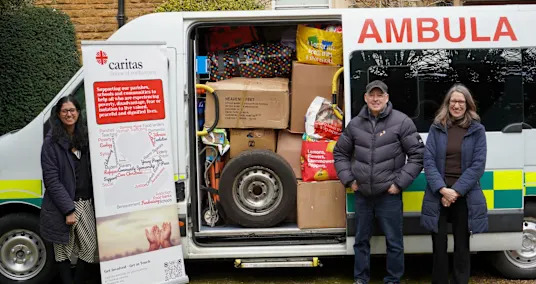
An ambulance filled with medical supplies is being sent to support frontline medics in Ukraine.
The vehicle departed from Northampton on Sunday and is travelling 1,650 miles (2,655km) to Kyiv, where it will be handed to charity Ukraine-Mother before being passed to military paramedics in Sumy.
The ambulance has been funded through donations of almost £8,000 to Caritas, the charity arm of the Catholic Diocese of Northampton, while a further £3,500 was contributed by Tove Benefice church in Towcester.
Steve Challen, from Tove Benefice, said: "These items will help paramedics save lives and support medical stabilisation facilities which treat the injured before they are transferred to hospitals."

The ambulance has around 950kg of medical equipment on board, including defibrillators, humanitarian aid and battery packs.
Contributions also came from Brackley School and Brackley Round Table, which together donated 200kg of supplies.
The delivery follows one of Ukraine's coldest winters in more than a decade, with temperatures dropping below -20C (-4F), and comes four years after Russia's full-scale invasion.
Many hospitals and essential medical facilities have been damaged or destroyed.
Two volunteers from the Tove Benefice will drive the ambulance across Europe before returning via Poland to England.
Follow Northamptonshire news on BBC Sounds, Facebook, Instagram and X.
More like this
Related Internet Links
LATEST POSTS
- 1
 Former elite Australian soldier charged with Afghan war crimes
 - 2NASA Artemis II tracker: Crew less than 60,000 miles from moon ahead of Monday flyby
- 3The most effective method to Promoter for Cutthroat Medical attendant Compensations in Your Medical services Office
- 4Ancient Egyptian pharaoh's boat is being reassembled in public at the Grand Egyptian Museum
- 5Survey: Canteen Cups With Great Warm Protection Impact


- This Underrated Italian City Boasts Indulgent Food & Captivating Views For A Romantic Escape
- Eating Brie, Gouda, cheddar may lower dementia risk, new study says
- The Way to Monetary Freedom: A Viable Aide
- What loving-kindness meditation is and how to practice it in the new year
- The pace of hiring just fell to the lowest since 2011, outside of the pandemic
- A definitive Handbook for Securities exchange Money management
- Extravagance SUVs for Seniors: Solace, Innovation, and Security
- Astronomers detect black hole blasting winds at incredible speeds
- Higher cost, worse coverage: Affordable Care Act enrollees say expiring subsidies will hit them hard